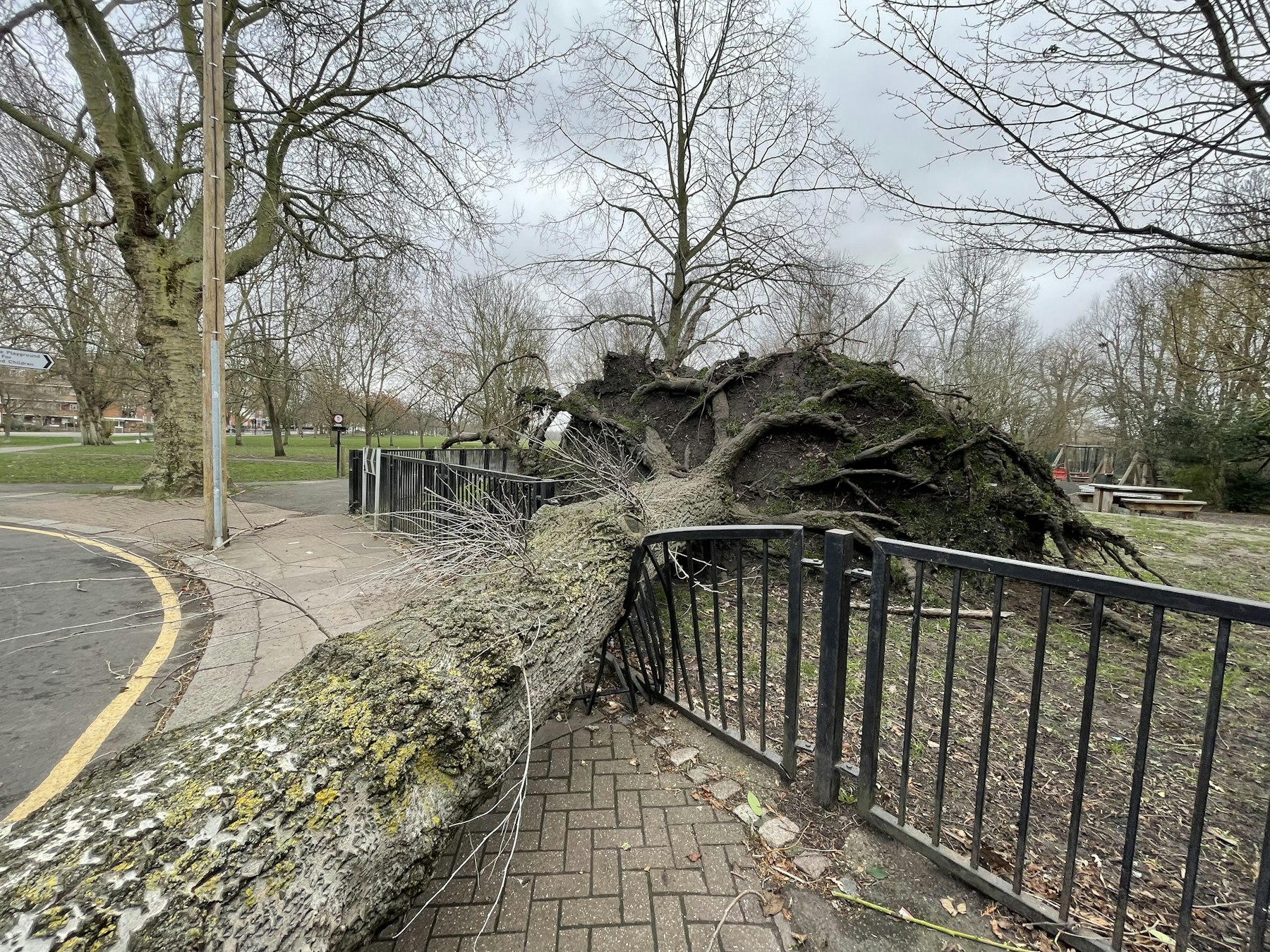
Short answer: the most severe documented wind damage near Chicago showed up west and south of the North Shore, but the whole region felt this storm system. News outlets reported that nearly 300,000 ComEd customers lost power over the holiday weekend, and heavy rain pushed area flood control systems close to their limit.
If you live in Northbrook, Winnetka, Glencoe, Highland Park, Lake Forest, Evanston, Wilmette, Glenview, Deerfield, Lake Bluff, Kenilworth, Bannockburn, Skokie, Morton Grove, Riverwoods, Lincolnshire, Buffalo Grove, Vernon Hills, Libertyville, or Mundelein, this weekend is worth paying attention to. A storm doesn't need to hit every street in town to cause a real problem for your specific home.
What Happened Over the Holiday Weekend?
A slow-moving band of severe weather pushed through the Chicago area during the July Fourth weekend, and it left a mess behind. Local news crews covered flooded basements, downed trees, stranded drivers, and outages stacking up block by block. Axios Chicago reported that nearly 300,000 ComEd customers were without power at some point during the storms.
The rain caused just as much trouble as the wind. Chicago's Deep Tunnel system, which is built to store huge amounts of stormwater, came close to filling up completely, and suburban reservoirs weren't far behind. That's worth knowing for North Shore homeowners, because heavy rain paired with a power outage is a rough combination, especially for any home that leans on a sump pump to stay dry.
Which Areas Were Hit the Worst?
As of when this article was written on July 6, 2026, town-by-town outage numbers for the North Shore hadn't been made public yet. The most detailed official damage reports, from NOAA's Storm Prediction Center, showed the worst confirmed wind damage in Illinois landing south and west of the North Shore on July 4.
- Huntley and Kane County: healthy trees snapped, corn fields were flattened, wires came down, fences were damaged, and a large sign along I-90 blew over.
- Kendall County: Millbrook saw trees down, including one that fell on a camper trailer.
- Will County: Plainfield and Shorewood had tree damage, with wind gusts measured near severe thresholds.
- South Cook County: Glenwood reported a large branch down along IL-394.
That doesn't mean the North Shore got off easy. It just means the most detailed official wind reports came from outside the lakeshore suburbs. North Shore towns still dealt with the same regional headaches: ComEd outages, heavy rain, falling limbs, wet basements, and roads that turned unsafe fast.
Why Were the Storms So Strong?
Storms tend to get stronger when heat, humidity, and shifting winds all show up at once, and that's close to what happened here. A large heat dome had settled over much of the central and eastern United States in the days leading up to the weekend. Hot air holds more moisture than cool air, so when a cooler front finally arrived, it had a lot of fuel to work with.
Put simply, the atmosphere was loaded. There was enough wind energy to knock down trees and power lines across parts of Illinois, and the rain came down hard enough to push stormwater systems near their breaking point.
Why This Matters for a North Shore Home
A standby generator can't stop a storm from happening. What it can do is keep the parts of your home that matter most running while the grid is down. That usually means your sump pump, refrigerator, freezer, Wi-Fi, medical equipment, lighting, garage door, and in some setups, part of your heating or cooling.
How a Generator Could Have Helped
During a power outage, small problems tend to snowball. The fridge starts warming up. The sump pump goes quiet. A phone battery dies at the worst possible time. If the outage stretches into the night, it gets stressful fast, especially for families with young kids, older adults, or anyone who depends on medical equipment.
A whole-home generator, or a system set up to back up specific circuits, can kick on automatically the moment utility power fails. A transfer switch is what lets power move safely from the generator into your home's electrical system. What size and setup makes sense really comes down to your house: the electrical panel, the gas service, and what you'd want kept running if the power went out tomorrow. For a full breakdown of what a system like that costs, see our whole house generator cost guide for Illinois.
North Shore Towns With Higher Outage Risk
Homes near large trees, older overhead power lines, low-lying spots, or basements that rely on a sump pump tend to feel storms harder than the rest. That describes a lot of streets in Winnetka, Glencoe, Highland Park, Lake Forest, Lake Bluff, Wilmette, Evanston, Northbrook, Glenview, Deerfield, Riverwoods, and Lincolnshire. We break down the full causes, from tree canopy numbers to ComEd's aging overhead lines, in our guide to why the North Shore loses power so often.
If your home has lost power more than once in the past few years, it might be worth pricing out a generator. You don't have to commit to anything right away. A quote is a low-pressure way to find out what size system fits your home and what it would actually protect.
What to Do Before the Next Storm
- Test your sump pump and make sure the discharge line is clear of debris.
- Charge your phones, battery packs, and flashlights before severe weather rolls in.
- Keep freezers closed during an outage so food stays cold as long as possible.
- Stay away from any downed wires and report them to ComEd or local officials right away.
- Check the ComEd outage map for real time status and restoration estimates in your area.
- Ask an electrician what it would take to back up the circuits that matter most to you.
Sources and Further Reading
Sources used for this recap include Axios Chicago storm damage reporting, NOAA Storm Prediction Center July 4 storm reports, Associated Press July Fourth storm coverage, and Business Insider heat dome and grid strain coverage.