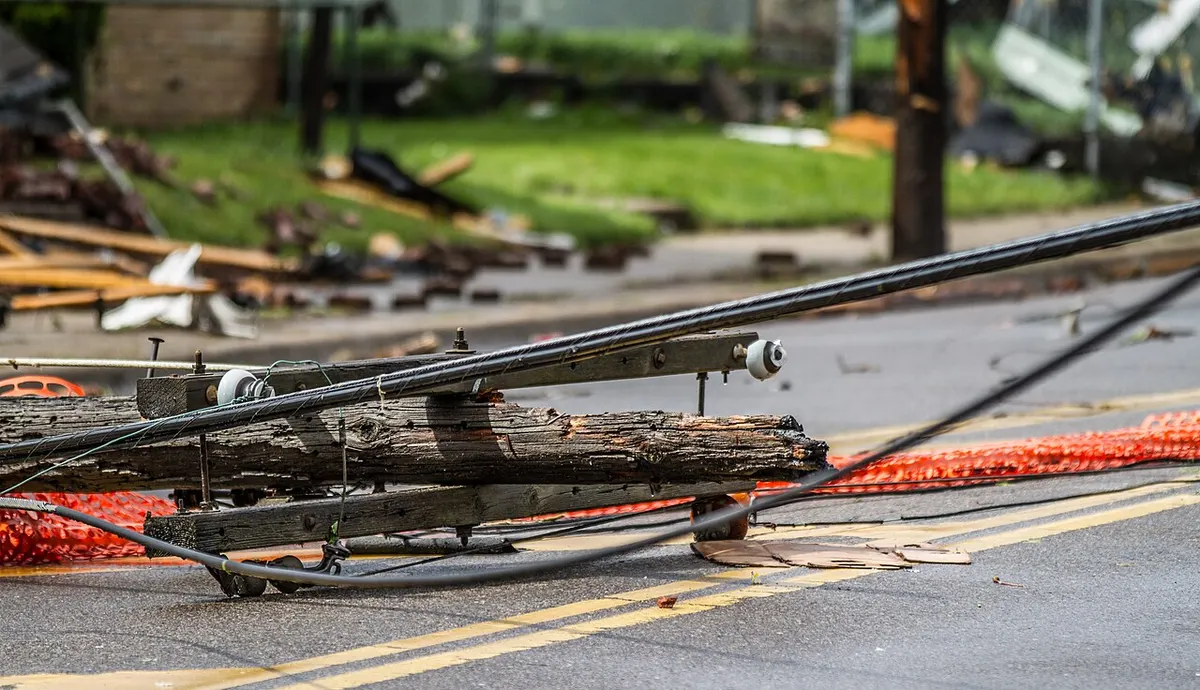
If your power keeps going out in Evanston, Wilmette, Winnetka, or anywhere else on Chicago's North Shore, you're not imagining it. Three things drive most local outages. Heavy tree cover falls on overhead ComEd lines. Much of that equipment has been outside in Midwest weather for decades. And our spot beside Lake Michigan feeds rough storms in every season.
The July 2026 holiday weekend proved the point. Four rounds of storms knocked out power to nearly 300,000 ComEd customers across the region, and some homes waited days for crews. This page explains why it happens here so often, and what you can actually do about it.
Why Does My Power Keep Going Out in the Chicago Suburbs?
Short answer: Most North Shore outages come from three causes. Trees and branches fall on overhead power lines during storms. Aging poles, wires, and transformers fail, often in extreme heat or deep cold. And severe weather rolls through several times a year. ComEd fixes most outages within hours, but big storms can take days.
Here is the full list of what takes power down around here, roughly in order:
- Trees and branches. The top storm cause. Limbs fall on lines, or whole trees take down poles.
- Equipment failure. Old wires, parts, and transformers give out, especially during heat waves and cold snaps.
- Weather itself. Lightning strikes, high wind, and ice buildup on wires.
- Animals. Squirrels and raccoons short out transformers more often than you'd think.
- Vehicles. A car hitting a utility pole can black out a whole circuit.
One more thing worth knowing. Outages follow circuits, not town borders. If your block keeps going dark while the next street stays lit, your homes likely share a circuit with a trouble spot, like one weak stretch of line or one overloaded transformer.
The Tree Problem: Beautiful Streets, Fragile Power Lines
Short answer: North Shore towns have some of the heaviest tree cover in Cook County, and most local power lines run overhead right through it. Evanston's tree canopy is about 39 percent and Wilmette's is about 41 percent. The Cook County average is 28 percent. More trees over more wire means more outages.
| Community | Tree Canopy Cover |
|---|---|
| Wilmette | About 41 percent |
| Evanston | About 39 percent |
| Cook County average | 28 percent |
Those canopy numbers come from the Chicago Region Trees Initiative at the Morton Arboretum. The big old parkway trees that make Evanston and Wilmette streets so pretty are the same trees that drop limbs on power lines every time a storm blows through.
ComEd trims trees to keep a 15 foot gap around its lines, which is wider than the industry norm. It helps, but it can't reach every tree. Summer leaves catch wind like sails. Winter ice adds hundreds of pounds to old limbs. Either way, the wire below loses.
Is ComEd's Grid Really That Old?
Short answer: Parts of it, yes. ComEd maintains about 1.3 million utility poles. In 2025 alone it replaced more than 4,700 poles, reinforced more than 8,400, and swapped out over 269 miles of distribution cable. The grid is improving, but most North Shore lines still hang overhead, exposed to every storm.
The upgrades are real. Since ComEd started its smart grid program in 2012, overall reliability has improved by about 57 percent. The company says those improvements have helped customers avoid nearly 24.7 million interruptions and saved more than 4.3 billion dollars in outage costs, according to its January 2026 reliability report.
So why does your power still go out? Because better is not the same as stormproof. Smart switches can reroute power around damage in seconds, but they can't stop a 60 foot silver maple from crushing the line that feeds your block. Until lines are buried, and burying them is slow and costly, tree heavy suburbs will keep feeling storms first.
How Bad Were the July 2026 Storms?
Short answer: Four rounds of severe weather crossed northern Illinois over the July Fourth weekend in 2026. Nearly 300,000 ComEd customers lost power. Wind gusts topped 50 miles per hour and tree damage was widespread. ComEd needed about three days to restore about 95 percent of affected homes.
| 2026 Storm Event | ComEd Customers Out | What Happened |
|---|---|---|
| July 4th weekend | Nearly 300,000 | Four rounds of storms, gusts over 50 mph, days to restore power |
| Mid June storms | More than 90,000 | Strong storms and tornado warnings across the area |
ComEd's own restoration updates confirmed the scale. We covered what it meant for local homes in our July 2026 storm recap, including the flooded basements that followed when sump pumps lost power. Two major outage events in one month is not a fluke year. It's the pattern now.
Find Out What Backup Power Costs for Your Home
Tell us about your house and we'll connect you with one licensed local electrician for a free, no-obligation estimate. No spam, no call lists.
Get a Free EstimateDoes Lake Michigan Make Storms Worse Here?
Short answer: The lake shapes our weather all year. It feeds moisture to summer storms, drives icy winter systems along the shore, and creates sharp temperature swings that stress electrical equipment. Lakefront towns from Evanston up to Lake Bluff feel those effects more than inland suburbs do. Winter outages bring their own risk once the heat goes out, so see our winter power outage prep guide for how fast pipes can freeze, or our hour by hour breakdown of how long a house can go without heat for the specifics.
The lake isn't always the villain. A cool lake breeze can weaken a summer storm right at the shoreline. But the trade is not in your favor. Wet heavy snow, freezing spray, and fast temperature swings are hard on wires, connectors, and transformers. Equipment that ages near the lake ages fast.
What Can You Do About Frequent Outages?
Short answer: Report every outage so ComEd's data shows your block's problem. Keep your own trees trimmed. Build a simple outage kit. And if your home depends on a sump pump, medical equipment, or work from home income, look at standby backup power before the next storm season. If a CPAP, oxygen concentrator, or other medical device is part of your household, our guide to power outages with medical equipment covers backup planning and ComEd's medical certification program.
Here are the steps, in order of effort:
- Report it every time. Text OUT to 26633, call 1-800-334-7661, or use the ComEd outage map. Reports help crews find damage and build the case for circuit upgrades. Our ComEd outage map guide walks through reading restoration estimates and signing up for text alerts.
- Trim your own trees. ComEd handles trees near its lines, but limbs from your yard hitting your service drop are on you.
- Know your winter risk too. Summer storms are not the only threat. Our polar vortex power outage guide covers what deep cold does to the grid and whether rolling blackouts are actually likely.
- Prep for the next one. Our power outage checklist covers what to check during and after a storm, from food safety to sump pumps.
- Consider standby power. A whole home generator starts on its own within seconds and runs on natural gas for as long as the outage lasts. Our 2026 Illinois generator cost guide shows what installation really costs, and our standby vs. portable generator comparison covers whether a cheaper portable unit is really enough. Our generator permit guide shows what your village will require before the install. If you are weighing the cost against the payoff, our guide on whether a whole house generator is worth it covers home value, insurance discounts, and flood damage math.
That last step is the one that changes outages from an emergency into a non-event. The lights blink once, the generator hums on, and your sump pump never misses a beat.
Frequently Asked Questions
Why does my power keep going out in the Chicago suburbs?
Trees are the biggest cause. Falling limbs take down overhead lines during storms, and aging poles and transformers fail in extreme heat and cold. North Shore towns like Evanston and Wilmette have tree canopy near 40 percent, well above the county average, so local lines take more hits.
How do I report a ComEd outage?
Text OUT to 26633, call ComEd at 1-800-334-7661, or report it on the ComEd outage map at outagemap.comed.com. The map also shows crew status and estimated restoration times for your area.
How long do ComEd outages usually last?
Most ComEd outages are fixed within a few hours. Big storms are different. After the July 2026 holiday weekend storms, ComEd needed about three days to restore about 95 percent of the nearly 300,000 customers who lost power.
Does the North Shore lose power more often than other suburbs?
Tree-heavy towns with overhead lines see more storm outages. Evanston's tree canopy is about 39 percent and Wilmette's is about 41 percent, well above the 28 percent Cook County average. More trees over more overhead wire means more chances for an outage.
Will a standby generator keep my house running through a multi-day outage?
Yes. A standby generator connects to your natural gas line, so it can run for days at a time. It starts on its own within seconds and keeps your sump pump, refrigerator, heat, and Wi-Fi running until ComEd restores power.
The Next Storm Is Already Coming
You can't move the trees, rebuild the grid, or calm the lake. You can decide what happens inside your house when the power goes out. If you want a real number for what backup power costs on the North Shore, fill out the quote form on this page. We send it to one local licensed and insured electrician, and your information is never sold.